Octa-Core Processor: Unpacking the Power Within Your Devices
- Introduction: What is an Octa-Core Processor?
- How an Octa-Core Processor Works: The Core Concept
- Octa-Core vs. Quad-Core: More Cores, More Power?
- Real-World Performance: Where Octa-Core Shines
- Advantages and Disadvantages of Octa-Core Processors
- The Future of Mobile Processors: Beyond Octa-Core?
- Conclusion: The Enduring Importance of the Octa-Core Processor
The octa-core processor is a term you hear often when discussing modern devices, but what does it actually mean, and how does it impact your daily life? As someone who’s spent countless hours geeking out over tech specs, I’ve seen firsthand how these powerful components have revolutionized everything from smartphones to laptops. An eight-core chip, as the name suggests, packs eight processing units onto a single chip, designed to handle multiple tasks simultaneously, enhancing overall performance and efficiency. This ability to multitask seamlessly is a significant leap from older, less powerful processors.
How an Octa-Core Processor Works: The Core Concept
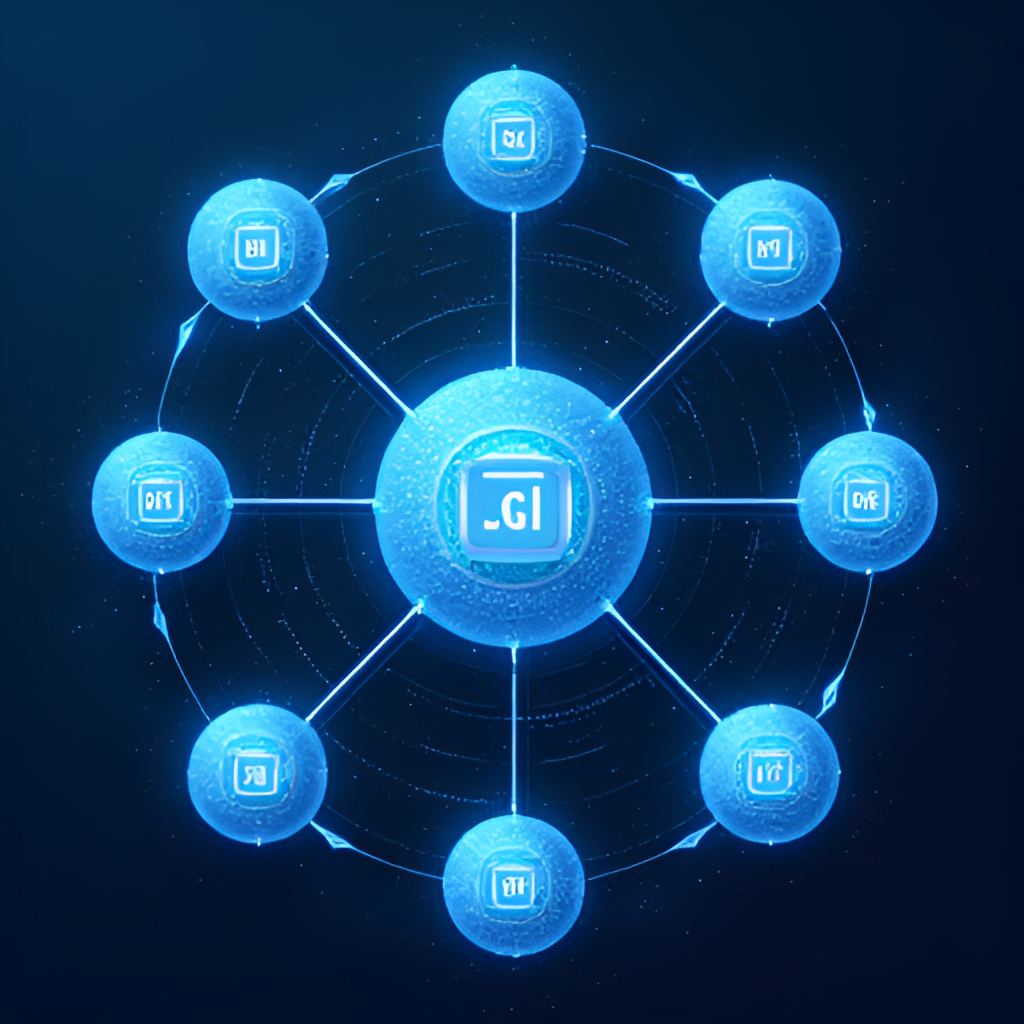
At its heart, a CPU core is like a tiny brain within your device’s main brain, the Central Processing Unit (CPU). It’s responsible for executing instructions and performing calculations . Think of these cores as individual workers on a complex project. In older processors, you might have had just one or two workers, meaning tasks had to be done one after another, or simple tasks had to wait for complex ones to finish. With an octa-core processor, you have eight workers. This allows for parallel processing, where different tasks can be executed independently and simultaneously .
Many modern octa-core designs utilize what’s known as a “big.LITTLE” architecture . This isn’t just eight identical cores working in unison. Instead, it typically involves two clusters of cores: a set of high-performance “big” cores for demanding tasks like gaming or video editing, and a set of power-efficient “LITTLE” cores for lighter tasks like checking email or browsing the web . The processor intelligently switches tasks between these core clusters to optimize both performance and battery life. It’s a smart way to ensure you get the power you need when you need it, without unnecessary energy drain during less intensive activities.
This efficient task distribution is a key advantage. Instead of a single or dual-core processor getting bogged down by trying to juggle too many things at once, an octa-core chip can assign different processes to different cores, leading to a much smoother and more responsive user experience, especially when you have multiple apps open.
Octa-Core vs. Quad-Core: More Cores, More Power?
The most common comparison when discussing octa-core processors is against their quad-core counterparts. Quad-core processors, as you might guess, have four processing cores . For many everyday tasks, like basic web browsing, using social media, or typing documents, a quad-core processor is perfectly sufficient and offers a good balance between performance and power efficiency . They are still widely used and not at all obsolete .
However, when you move into heavier workloads, the difference an octa-core processor makes becomes apparent. Heavy multitasking, running resource-intensive applications like video editing software, or playing demanding games can push a quad-core chip to its limits . This is where the eight-core configuration steps in, providing significantly enhanced multitasking capabilities and better performance in applications optimized for multiple threads . While a higher clock speed on a quad-core can sometimes outperform a lower-clocked octa-core in single-threaded tasks, for workloads that can utilize multiple cores effectively, the octa-core generally has the edge .
It’s important to remember that the number of cores isn’t the *only* factor determining performance. Clock speed (how fast each core can process instructions) , processor architecture , cache size , and overall system optimization all play crucial roles . My experience shows that while more cores are great, a well-optimized system with fewer, more powerful cores can sometimes feel just as snappy for typical use as a system with more, less powerful cores. It truly depends on what you’re doing and how the software is designed .
This image is a fictional image generated by GlobalTrendHub.
Real-World Performance: Where Octa-Core Shines
So, where do you really feel the benefit of an octa-core processor in your daily life? The most noticeable improvements are often in scenarios involving parallel processing – essentially, doing many things at once or running applications designed to split their work across multiple cores .
- Seamless Multitasking: Jumping between multiple apps, having several browser tabs open, and running background processes feels much smoother. I remember upgrading from a quad-core phone to an octa-core, and the difference in switching between a game, a messaging app, and a web browser was night and day.
- Demanding Apps: If you use your device for video editing, photo manipulation, or running complex simulations, an octa-core provides the processing muscle needed to handle these tasks faster and more efficiently . Rendering a video, for instance, is a task that can be heavily parallelized, allowing an eight-core chip to complete it significantly quicker than a quad-core.
- Enhanced Gaming: While the Graphics Processing Unit (GPU) is crucial for gaming visuals, the CPU still plays a vital role, especially in complex games with a lot of AI or physics calculations . An octa-core processor can help ensure smoother frame rates and reduce lag, contributing to a better gaming experience .
- Improved Server and Cloud Efficiency: In larger scale applications like servers and cloud computing, octa-core processors are essential for handling high traffic, managing multiple virtual machines, and processing large databases simultaneously . The ability to distribute workloads across many cores is fundamental to maintaining performance and scalability in these environments.
It’s true that for basic tasks, an octa-core might not feel dramatically faster than a good quad-core . The extra cores might simply be idle . But for users who push their devices with heavier workloads, the benefits of an eight-core chip are substantial. In 2023, over 60% of high-end smartphones featured octa-core processors, a testament to their capability in delivering a seamless user experience .
Advantages and Disadvantages of Octa-Core Processors
Like any technology, octa-core processors come with their own set of pros and cons:
Advantages:
- Superior Multitasking: This is perhaps the most significant benefit, allowing devices to handle numerous applications smoothly.
- Better Performance in Multithreaded Applications: Software designed to utilize multiple cores sees a considerable performance boost.
- Improved Energy Efficiency (with big.LITTLE): The architecture allows for smart power management by using efficient cores for lighter tasks.
- Enhanced Gaming and Graphics Processing: Supports smoother gameplay and faster rendering in demanding games and graphical applications.
Disadvantages:
- Not Always Fully Utilized: Many common applications don’t heavily utilize more than a few cores, meaning the extra cores can be idle.
- Potentially Higher Power Consumption and Heat: While modern designs are efficient, more active cores *can* still consume more power and generate more heat than fewer cores, especially in older models or under sustained heavy load. Thermal throttling, where the processor slows down to prevent overheating, can limit peak performance .
- Higher Cost: Generally, devices with octa-core processors tend to be more expensive.
- Software Optimization Matters: The full benefit is only realized when software is optimized to distribute tasks across multiple cores.
Understanding these points is key to making an informed decision. For a power user who runs many apps or uses demanding software, the advantages often outweigh the disadvantages. For someone who primarily checks email and browses the web, a quad-core might be a more cost-effective and energy-efficient choice.
This image is a fictional image generated by GlobalTrendHub.
The Future of Mobile Processors: Beyond Octa-Core?
As technology continues its rapid advancement, what does the future hold for mobile processors? While octa-core is currently prevalent, especially in high-end devices, the industry isn’t standing still .
We are already seeing processors with even higher core counts, such as deca-core (10 cores), emerging in the market . Beyond just adding more cores, future advancements are focusing on several key areas:
- Enhanced AI Capabilities: Integrating dedicated AI accelerators and improving machine learning capabilities directly into the chipset is a major trend, enabling smarter features like advanced photography, real-time language processing, and more intuitive user interfaces.
- Increased Energy Efficiency: Smaller manufacturing nodes (like the 3nm process used in recent flagship chips) mean more transistors in a smaller space, leading to significant improvements in power efficiency and battery life.
- Improved Integrated Graphics: The performance of the integrated GPU is continually improving, crucial for gaming and demanding graphical applications.
- Better Thermal Management: As processors become more powerful, managing heat is critical to sustained performance and preventing throttling. Innovations in cooling systems will be increasingly important.
- 5G and Connectivity Optimization: Processors are being designed to better handle the demands of 5G networks, ensuring faster and more stable connectivity.
While concepts like quantum computing are fascinating, integrating them directly into phones is highly unlikely in the foreseeable future due to current size and environmental requirements . The focus for mobile processors will remain on optimizing existing architectures, improving efficiency, and integrating specialized hardware for tasks like AI.
The evolution from single-core to dual-core, then to quad-core and now the prevalence of the octa-core processor shows a clear trend towards more parallel processing power to meet the growing demands of modern software and user expectations. It’s exciting to think about what the next generation of these tiny powerhouses will bring.
Conclusion: The Enduring Importance of the Octa-Core Processor
In conclusion, the octa-core processor has become a cornerstone of modern computing, particularly in mobile devices. By offering eight processing cores, often in an intelligent big.LITTLE configuration, it provides significant advantages in multitasking, running demanding applications, and improving overall system responsiveness. While not always necessary for the lightest tasks, its impact on performance for power users, gamers, and in server environments is undeniable. The journey from basic single-core processors to the sophisticated octa-core processor highlights the relentless pursuit of faster and more efficient computing. As mobile technology continues to advance, we can expect processors to become even smarter and more capable, further blurring the lines between mobile devices and traditional computers. Understanding what an eight-core chip offers empowers you to make better choices about the technology you rely on every day.