Amoy Quee Camp: A Cornerstone of Singapore’s Military Heritage
- Introduction to Amoy Quee Camp: More Than Just a Base
- Tracing the Roots: Amoy Quee Camp’s Colonial Origins
- From British Rule to SAF Stewardship: A Pivotal Transition
- The Modern Era: Amoy Quee Camp as a Hub for National Service and Development
- Beyond Training: Life, Lore, and the Future of Amoy Quee Base
- Amoy Quee Camp: Securing Singapore’s Future
Amoy Quee Camp stands as a silent sentinel in Ang Mo Kio, a place deeply etched into the fabric of Singapore’s defence history. For many Singaporeans, the name might evoke memories of National Service, cadet camps, or perhaps simply a significant military installation. But as someone who’s delved into its past, I can tell you this Singapore military camp is far more than just a collection of barracks and training grounds; it’s a living testament to the nation’s resilience and evolving defence capabilities, from its colonial beginnings to its modern role as a vital training hub. We’ll explore its fascinating journey, its pivotal role, and what the future holds for this enduring site.
Tracing the Roots: Amoy Quee Camp’s Colonial Origins
The story of Amoy Quee Camp begins much earlier than many might imagine. Established in 1938, it was initially part of the British colonial defence network, known as the Commonwealth Defence Scheme. The primary objective then was clear: to protect Singapore from potential external threats, particularly as World War II loomed large on the horizon. Imagine the strategic foresight, even back then, to designate this specific plot of land in what would become Ang Mo Kio for military purposes. It wasn’t just a random spot; its location was key.
During the tumultuous years of the Japanese Occupation (1942-1945), Amoy Quee Camp, like much of Singapore, fell under Japanese control. The occupying forces quickly recognized its strategic value, repurposing it for their own logistical needs. It truly highlights how critical this base was, even to those who conquered it. Post-war, control reverted to the British authorities, who then embarked on significant rebuilding and expansion efforts. This period saw the camp serving as a base for various British Army units, playing a crucial role in the region’s post-war stability until Singapore’s independence in 1965. My research indicates that in the late 1950s, it even housed the 237 Signals Squadron (Comcan) Royal Signals, a compact unit focused on maintaining radio receivers for Singapore’s communication needs.
A particularly interesting chapter in its British era was the establishment of RAF Amoy Quee in mid-1968. This Royal Air Force base, housing the 1003 Signals Unit, was at the forefront of secure direct voice communications, utilising advanced SCAT (Satellite Communications Antenna Tracker) equipment via a Skynet satellite. This technological leap replaced older High Frequency (HF) communication networks, serving the Royal Navy, Army, and RAF. It wasn’t just a military camp; it was a nexus of cutting-edge military communication, making the Amoy Quee base a quiet but vital cog in the British defence machinery in the Far East.

This image is a fictional image generated by GlobalTrendHub.
From British Rule to SAF Stewardship: A Pivotal Transition
The year 1965 marked a monumental shift for Singapore and, by extension, for Amoy Quee Camp. With the nation gaining independence, control of the camp was officially transferred to the newly formed Singapore Armed Forces (SAF). This transition was more than just a change of ownership; it represented Singapore taking full charge of its own defence. As a young nation, establishing a robust military was paramount, and existing infrastructures like this military camp became cornerstones for this critical development.
The SAF wasted no time in redeveloping and modernizing Amoy Quee Camp over the subsequent decades. These efforts were extensive, aimed at transforming the camp into an efficient and capable training centre that could meet the evolving requirements of a modern military. New facilities sprang up: enhanced training grounds, administrative buildings, accommodation blocks for both soldiers and officers, dining halls, medical facilities, and even recreational areas. These additions ensured that national servicemen had access to a comprehensive support system during their rigorous training programs. From basic combat training to specialized roles, Amoy Quee Camp has remained a vital hub for shaping Singapore’s armed forces. My discussions with former servicemen often highlight the comprehensive nature of the training received here, emphasizing physical endurance, mental discipline, teamwork, and technical skills crucial for effective defence operations.
Interestingly, Amoy Quee Camp even dabbled in agriculture for a period. In 1976, it boasted Singapore’s largest pineapple farm, spanning an impressive 6 hectares. This initiative wasn’t just for show; it was a pragmatic effort to grow food for soldiers and served as an experiment to assess the viability of harvesting and selling surplus fruit for profit. It’s a unique footnote in the camp’s history, showcasing the multi-faceted approaches taken to self-sufficiency in the early days of independent Singapore.
The Modern Era: Amoy Quee Camp as a Hub for National Service and Development
Fast forward to the 21st century, and Amoy Quee Camp continues to evolve. Since 2001, it has primarily housed the Headquarters of the National Cadet Corps (HQ NCC), making it the central National Cadet Corps campus for thousands of young Singaporeans. This move cemented its role in nurturing future generations of national servicemen and fostering a strong sense of discipline and national pride from a young age. The NCC Campus, officially opened in May 2001, offers dedicated facilities like terrain for field training, a 25-meter rifle range, and the NCC Motivation Course – an obstacle course designed to boost cadets’ fitness. From personal camouflage lessons to archery and foot drills, these experiences are foundational for many, including students from Metta School who undertake their 2D1N NCC camp here.
Beyond the NCC, the camp also serves as the Headquarters of the 3rd Division Artillery (HQ 3 DIV ARTY), underscoring its continued importance to the Singapore Army’s operational readiness. Its significance is not just historical; it remains one of Singapore’s key military installations, with its history and role deeply ingrained in the military culture. It’s a place where leadership capabilities and professional competencies are honed to safeguard the nation’s security.
The camp is currently undergoing another significant transformation. Since April 2024, a redevelopment project is underway, slated for completion by 2030. This major undertaking is designed to intensify land use and accommodate functions and units relocated from Khatib Camp, which will be returned to the state for residential development. This strategic move demonstrates the government’s long-term planning for both defence and urban development, ensuring that while land is optimized for housing, military readiness remains uncompromised by consolidating functions within the existing, well-established Amoy Quee base.
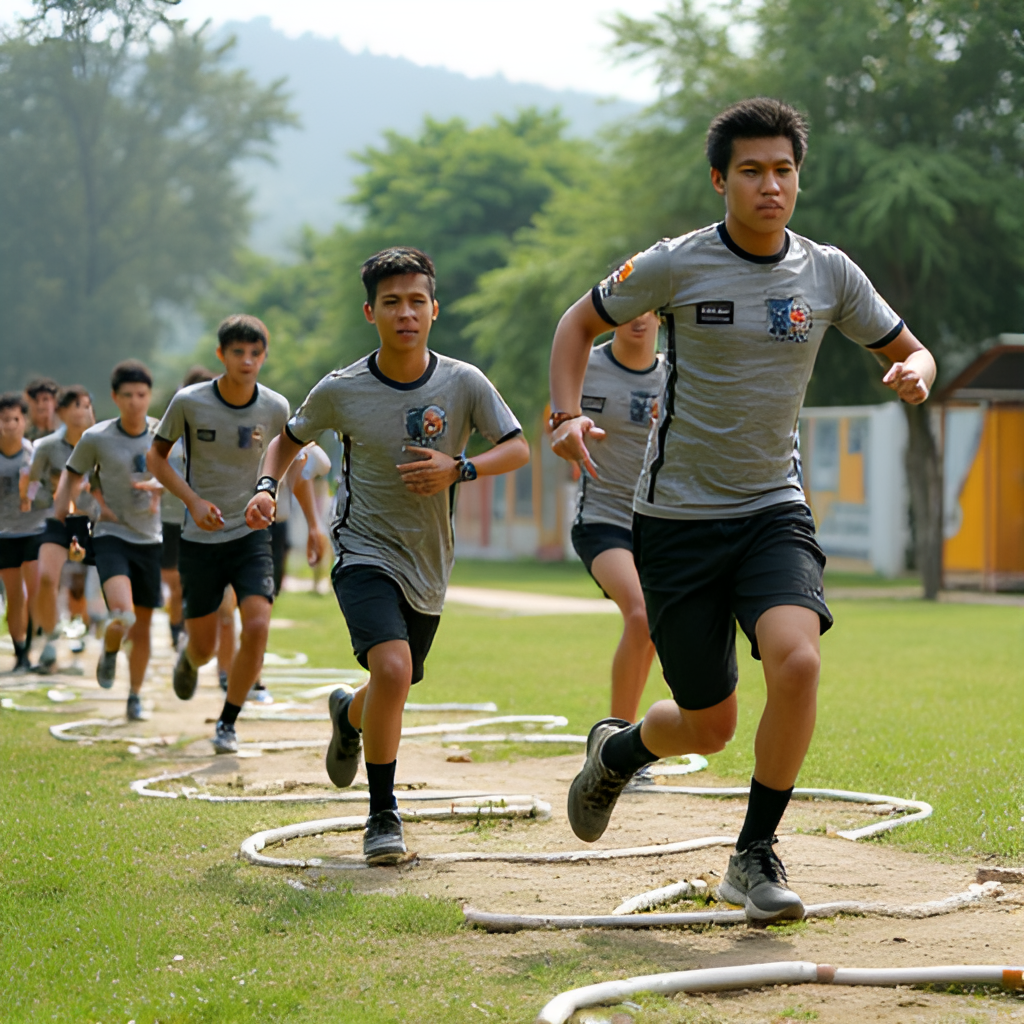
This image is a fictional image generated by GlobalTrendHub.
Beyond Training: Life, Lore, and the Future of Amoy Quee Base
For those who’ve passed through its gates, Amoy Quee Camp holds a unique place in their memories. Beyond the drills and structured training, there are the shared experiences, the camaraderie forged, and perhaps even the occasional tall tale. Like many older military installations, Amoy Quee has its share of local lore, with some former servicemen sharing “haunted” stories, adding a touch of mystique to its sturdy grounds. While such tales often emerge from the rigours and quiet solitude of camp life, they speak to the indelible mark these places leave on those who serve there.
I recall speaking with a veteran who described his time at the camp as “cosy and laid-back” in the late 1960s when it was the RAF’s domain, a stark contrast to the intense training many associate with it today. These varied recollections paint a picture of a camp that has adapted not only its infrastructure but also its atmosphere over the decades, reflecting the changing needs and nature of military service. The presence of the National Cadet Corps campus at the heart of Ang Mo Kio also signifies its integration into the community, exposing younger generations to military discipline and values.
The ongoing redevelopment project is a clear indicator of Amoy Quee Camp’s enduring importance. While its size has been significantly reduced over the years, from about 89 hectares to 52 hectares, to free up land for new homes, its operational intensity is set to increase. This intensification ensures that the Singapore Armed Forces can continue to maintain operational readiness efficiently. The transformation speaks to Singapore’s pragmatic approach to land use and defence, ensuring that historical sites serve contemporary needs while honouring their past.
Amoy Quee Camp: Securing Singapore’s Future
From its beginnings as a British colonial outpost to its crucial role today as a bustling National Cadet Corps campus and a core Singapore military camp, Amoy Quee Camp embodies Singapore’s journey of self-reliance and defence building. Its walls hold countless stories of servicemen who have passed through its gates, each contributing to the nation’s security. My own fascination with Singapore’s military heritage has often led me back to sites like this, places that quietly but powerfully underpin the country’s stability. As Amoy Quee Camp continues its redevelopment, it reaffirms its indispensable position in securing Singapore’s future, a truly enduring legacy.